The calm seas of the Mediterranean do sometimes give way to the awesome swells of surf ... in some places ... including parts of Sicily.
Dream of Italy� - Italy Travel News Blog: Surf's Up in Italy
Wednesday, 5 May 2010


Sunday, 2 May 2010
2,500 year "Homer" Ship Found off Coast of Sicily - A Treasure Hunter's Delight

Sicily has many more treasures to give up yet. Recently, a ship dating back to 500 BC was salvaged off the coast of Gela, Sicily. The ship was believed to be sailing from Greece to Gela, a Greek colony, transporting various materials. The 21-metre long vessel, is the largest of its type ever discovered, but what is the most amazing thing to me, is that the ship was constructed using a particular obscure method, of pine planks ''sewn'' together with plant fibre, described in beautiful detail by the legendary classical writer, Homer, in his epic, The Iliad.
It is the best-preserved example in the world of a Greek ship built using this technique, and therefore has earned the title of the "Homer" ship. In fact, according to this article from National Geographic, the ship is, "something of a missing link in the evolution of naval engineering".
Sicily's regional councillor for culture, Antonello Antinoro, went even further in typical Italian flourishing style by claiming that, ''Gela's ancient ship is the patrimony not only of Sicily but of all humanity.''
Go here for an amazing video of the submerged vessel. This significance of this discovery kind of makes you want to get into the diving business as a treasure hunter.
Footnote: Sicily, as readers of this blog will recall, was the site of a number of flourishing Greek city states, such as Gela and Naxos, and including the Daddy of them all, the great Syracusa, which rivalled Athens for dominance in the Hellenic world.
![Reblog this post [with Zemanta]](https://lh3.googleusercontent.com/blogger_img_proxy/AEn0k_uBEU_X_Op7TY0tOL4Q7su4jA_TIMvSWUzK73fhoUE94M8n7iENFa9LEonxHre13HAzFEjCCYF7aSXDz8vhdC8vemU2701IxFXf6lbaflYDQJeg1vNstjEhakZIA4Fxm6wrCEbDLn1UK711Oa6en5Qc=s0-d)
Tuesday, 27 April 2010
The "Bloody Handprint" 447 years on


Those of you who follow this blog (on all that is fascinating and useful about Sicily) will know that we are big fans of the legend of the Baroness of Carini. This is partly because it is based on a poem written in old-Sicilian that is regarded as one of the most beautiful poems written in Italy (even Dante claimed that the only true poets in his era were from Sicily), and partly because it is set in an incredible 11 Century castle with awe-inspiring views of the Mediterranean.
The legend states that the Baroness of Carini was murdered by her enraged father as an "honour-killing" when he found out about an affair that she was having. The murder was so brutal and shocking that the legend states that once a year, a bloody hand-print appears on the wall of the castle in the room where the murder took place.
So you think this is all just a legend and a good bedtime story? Think again, 447 years after the alleged crime, Italian police are re-opening the case with the help of some 21 Century science. The lesson being that in Italy, crime does not pay - the police will eventually get to you, even if it is a few centuries later.
Read on ...
P.S. What really spooks me the most about this article on the Castle is the following;
"Several years ago we tested areas of the castle we knew the Baroness lived in with electromagnetic field meters, and the results were very strange," ... "In certain rooms it was as if there were ghosts in the castle, as if the murdered Baroness lives on."
Monday, 20 July 2009
Top 10 Food Experiences In Sicily

A US blogger has enshrined their Top 10 Food Experiences in Sicily. I have listed them here and added my own comments for further information.
- Fresh Ricotta. It is a well known secret that the Sicilian shepherds keep the best ricotta for themselves. Break into this inner circle and your taste buds will thank you.
- Cassata. And not like any cassata you haver tasted before. This is the real stuff.
- Gelato. Sicilians basically invented the stuff.
- Gelato in Brioche (sweet bread bun). Strange but incredibly addictive. After this you realise that this is the way gelato is supposed to be eaten.
- Watermelon Pudding. Only Sicily and North India share this exotic dessert in common. a relic from the ancient spice trade.
- Fragoline. Tiny, sweet, delicious strawberries.
- Arancine. Need I say more?
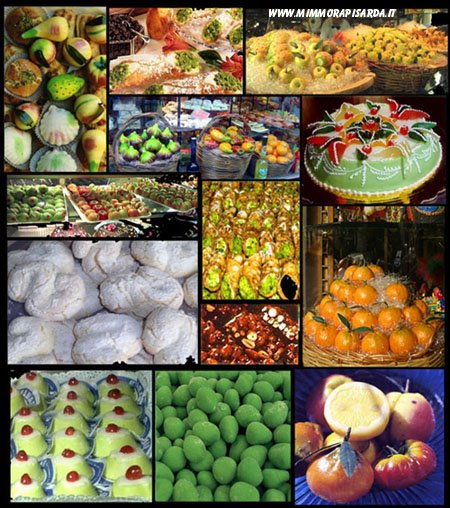
- Fruta di Mattorana. Actually made from real fruit...and are actually quite delicious.
- Seafood. In particular Tuna and Swordfish.
- Wine by the Carafe. Vini di Paesi or Vini Locale. Either will be good.
Monday, 20 April 2009
Sicily: Contrasts at a Meditteranean crossroads

Another interesting pressie about my magnificent island..
GIOVANNA DELL'ORTO writes For The Associated Press
MONREALE, Italy—I am inside one of the most glittering monuments to Christianity—the mosaic-filled cathedral of Monreale - talking to a conservator, whose apron is covered in Arabic script, about President Obama.
As our chat about possible new American policies in the Middle East interrupts his excruciatingly slow restoration of the Duomo's 900-year-old floor mosaic, I can't help thinking, only in Sicily.
Throughout its 2.5 millennia of history, this jarringly gorgeous Mediterranean island has been at the crossroads of drastically different cultures. Miraculously, it has managed to fuse those contrasts in a peaceful dialogue. The fruits of that fusion make Sicily one of the most intriguing regions of Europe.
As our chat about possible new American policies in the Middle East interrupts his excruciatingly slow restoration of the Duomo's 900-year-old floor mosaic, I can't help thinking, only in Sicily.
Throughout its 2.5 millennia of history, this jarringly gorgeous Mediterranean island has been at the crossroads of drastically different cultures. Miraculously, it has managed to fuse those contrasts in a peaceful dialogue. The fruits of that fusion make Sicily one of the most intriguing regions of Europe.
Twice over the last decade, I have done weeklong tours of the island, marveling at everything from Catholic chapels bejeweled by Muslim artists to the everyday heroism of anti-Mafia businesses. A visit to Sicily is a study in the unexpected fusion of times and cultures. And these are a few of my favorite pairings:
MULTICULTURAL DEVOTIONS: Bleary-eyed from the overnight ferry that took me from Naples to Palermo, Sicily's capital, I made a beeline for the Cappella Palatina, the chapel built in the early 1100s by the Norman king in his palace complex. At 8:30 a.m., I had it for myself for a blissful few minutes before the tourist buses arrived, enough to be transported by the glitters of gold chasing each other from the wall mosaics into the painted kaleidoscope that is the carved wooden ceiling.
MULTICULTURAL DEVOTIONS: Bleary-eyed from the overnight ferry that took me from Naples to Palermo, Sicily's capital, I made a beeline for the Cappella Palatina, the chapel built in the early 1100s by the Norman king in his palace complex. At 8:30 a.m., I had it for myself for a blissful few minutes before the tourist buses arrived, enough to be transported by the glitters of gold chasing each other from the wall mosaics into the painted kaleidoscope that is the carved wooden ceiling.
Under the patronage of Sicily's first Catholic king, Muslim artists executed the ceiling, complete with Kufic inscriptions, while Greek artists created mosaics representing Christ and New Testament scenes in the Byzantine tradition. Straight from the era of the crusades comes the most dazzling artistic and cultural synthesis of the medieval Mediterranean world. Nobody knows exactly how this harmony came about, but it's both inspiring and humbling to feel they had figured out a way to live symbiotically despite differences we are still struggling with 900 years later.
Other can't-miss glories of the Palermo area from the time of the Normans are the fortress-looking churches that hide eerily realistic golden mosaics: The Monreale Duomo, perched high on a barren, prickly-pear studded mountain; the Martorana church in Palermo, across from the mosque-looking, red-domed church of San Cataldo; and the Cathedral at Cefalu, standing sentinel over the medieval fishing village.
ANTIQUITY ALIVE: Ancient Greek colonizers snapped up the best vistas in Sicily. I can't decide if the most scenic archeological site in the Mediterranean is Segesta in its splendid valley isolation among pines and honey-scented wildflowers; Selinunte, framed by eucalypti on its Africa-facing sandy shores; the Taormina theater opening over the sea and the volcano, Mount Etna; or Agrigento's Valley of Temples, by sheer size the most stunning of them all. I like the latter best in the late afternoon, when the wind-eroded stone of its two best-preserved 450 B.C. Greek temples - the nearly intact Tempio della Concordia and the Tempio di Giunone up the ridge - turn strawberry gold in the dusk and then are floodlit among the dark silhouettes of olive trees and agave plants.
Much criticism has been aimed at the ugly concrete buildings from modern Agrigento looming over the next hillcrest, but I find the contrast can't possibly spoil this view. At most, I find it shames our modern cookie-cutter architecture juxtaposed to the hushed, solemn perfection of these temples.
REVITALIZING HIDDEN TREASURES: If Sicilians 2,500 years ago stunned by vistas, those who built palaces and piazzas in the Baroque era astonished by intricacies. Noto, Ragusa Ibla and my favorite, the Ortigia island neighborhood of Siracusa, are full of churches and palaces exuberantly carved with mythical figures and floral arrangements. Once literally crumbling in decay, they have been scrubbed to a shine like aristocratic drawing rooms. Subtler and more sumptuous at the same time are the palaces of the Sicilian nobility, those haunted by Burt Lancaster in the 1963 film "The Leopard."
Take two palaces where you can arrange to stay: The countryside villa of Baron Luigi Bordonaro di Chiaramonte, built in the 13th century inland from Agrigento, and the gorgeously frescoed Palazzo Ajutamicristo of the Barons Calefati di Canalotti in Palermo's historic center. Both young owners are gambling that tourism will help their historical treasures stay vital.
Maria Calefati said hers is one of five or six families who are staying in their ancestral palaces, revitalizing the still dangerously neglected core of Palermo. Bordonaro says of the villa and surrounding olive groves that have been in his family for 300 years: "It's my home, it's my commitment."
ATTRACTIONS: Most attractions listed have an admission fee, usually between $5-9 (4-7 euros). A car is necessary as distances are considerable; it's about 250 miles from Noto in the southeast to Segesta in the northwest. But don't drive in downtown Palermo, where congestion, scarce parking and the local driving style are difficult to cope with.
Sunday, 2 November 2008
Aida at the Teatro Massimo

The Teatro Massimo in Palermo it is the largest Theatre in Italy and one of the largest of Europe (the third after the Opéra National de Paris and Staatsoper in Vienna), and is world renowned for its perfect acoustics.
The Teatro Massimo was dedicated to King Victor Emanuel II and inaugurated on 16th May 1897 with a performance of Giuseppe Verdi’s Falstaff. Although you will be more likely to recognise Massimo not for its glorious past but for the final scene of the Godfather Part III : The climactic and gripping opera scene shot right on the staircase of this majestic theatre.
Italy is Opera's ancestral home, so why not experience a must see event in one of the most fascinating theatres of the world.
Teatro Massimo offers visitors a rich choice of operatic seasons throughout most of the year.
Aida will be performed from November 26th to December 7th 08. Bookings are essential!
Sicilians DO dress up for Opera - expect some glamour...
Monday, 15 September 2008
Bike Riding in the Sicilian Aeolian Islands

This post is for those of you who are passionate about the joys and benefits of truly experiencing a new place by way of riding a bike. The Travel Mag, International Living, has a Special Report on their choice for "The World's 10 Best Travel Adventures", with an adventurous biking adventure in the two most remote islands of the volcanic Aeolian Islands making the list.
Sicily and the Aeolian Islands for Hike or Bike
The seven small islands sprinkling the waters just north of Sicily contain some of the most picturesque living you can imagine. The smallest and western-most of the islands, Alicudi, is covered by pink heather in the spring, and is mostly overlooked by tourists.
The western half of the island is completely uninhabited, and the steep cliffs drop straight into the blue waters beneath, while the eastern half is covered by steppes on which the village sprawls.
While Alicudi is covered in pink heather, the next island, Filicudi, is covered in green ferns. This rugged island has two small villages on a peninsula, and hardly any noise—the only usable road here is a path for mules. The largest island, Lipari, is an island ofbeautiful contrasts. White pumice-stones and pitch-black obsidian cover the coasts.
Volcanic peaks rise above long white beaches. And though there are 600 thermal springs, it only has four towns.
Four more islands, each a magnificent gem in the crown of the Mediterranean, covered in olive groves, fields of golden corn, and strawberry tree woods. The seven volcanic islands contain a spectrum of diverse landscapes from fields to beaches to mountains. And all of it free of smog, bright lights, and city noise.
And then there is Sicily itself. Olive groves, lava fields, and citrus orchards surround the great Mt Etna, while gorgeous beaches, stylish boutiques and chic cafes will leave you in want of nothing.
Walk and bike these fabulous islands for seven days for around $3,500. Bike Riders offers ready-to-go trips. You may want to throw in a few boat tours to see the beautiful island profiled against the aqua Mediterranean waters, which will be an additional (but worthy) cost. And, don’t forget to sample locally made marzipan and authentic cappuccinos along your adventure.
Sunday, 7 September 2008
For a Traditional Sicilian Experience ...

Via Carso 23
Nestled atop of a scenic mountain overlooking the sea and dominated by a 11th century castle, the mediaeval village of Carini is the perfect spot for those seeking a unique Sicilian holiday. A "real" Sicilian experience.
Siciliamo has just acquired the perfect house for a true romantic Sicilian getaway for those of you who want to immerse yourselves in all the beauty and abundance that Sicily has to offer. Located just minutes away from the Palermo Airport in the village of Carini, Via Carso 23 is an early 1900's building in a mediaeval cobbled-stoned alley, consisting of two floors. The house contains a dining room, one king side bedroom, a living area, a small study, fully equipped kitchen and two bathrooms.
The property is stylishly and tastefully furnished and is ideal for a couple who have an eye for quality and class and who want to enjoy the wine, food and ambiance of this magical land.
Rates are €80 per night or €400 per week. Each booking is entitled to a 20% discount on the "Dangerous Eating" Sicilian culinary experiences in Palermo. Also included is a welcome pack of Sicilian produce samples.
For all enquires, email Siciliamo at info@siciliamo.com, or go here.
Sunday, 31 August 2008
History of Sicily in one hundred seconds
This video is not only one of the funniest things about Sicily I have seen in a long time (which is really saying something as those who have driven in Palermo traffic can attest to) but it also provides a rich outline of one of the most diverse and ancient European civilisations - compacted into just 100 seconds! As the author, Turi Scandurra says, "blink and you may miss a whole century".
Credits:
Script and Animation: Turi Scandurra
Screenplay: Nino Arcidiacono
Music: Peppe Gullotta
For those of you who want to know exactly what was said, here is the full transcript.
One hundred eighty millions years ago Tethys Ocean splits Pangaea
mountain ranges rise up among coral reeves
it’s hot
flora, fauna and dwarf elephants
the volcano Etna grows up by underwater eruptions
then five thousands years ago in Stentinello the first neolithic civilization
Sicanians get overpowered by Sicels
Pantalica is a necropolis for all the dead
phoenician sailors
sea urchins and swordfishes
here come the Greeks
Naxos and Syracuse
theaters carved in rocks or built on a hill like in Taormina
Polyphemus and mermaids
Archimedes and his burning mirrors
Scilla and Cariddi
first Punic War with Rome
Republic and Empire
corn and gladiators, then Vandals and Ostrogoths
Byzantines, Arabians and Muslims
tuna nets, orange and lemon trees
scimitars and sheiks
watering and architecture
ceramics and cassata cakes
Roger II and the Normans
heritage to Suebi
Frederick II and Poetry School
Ciullo d’Alcamo, the first parliament
Aragonese and Angevins
The Vespers when the French drove us mad
then peace of Caltabellotta
House of Hapsburg and Charles V
Bourbon dynasty
Garibaldi who got injuried
Piedmontese army Carabiniers
the Serval, puppetteers
unification of Italy
the Messina Earthquake
bandits and mafia
coppola and lupara
Giovanni Verga and Luigi Pirandello
emigration and First World War
fascism
allied landings, Lucky Luciano
the bandit Giuliano and laced coffee (Sicilian style)
Placido Rizzotto and Peppino Impastato
Tano Badalamenti and Marlon Brando as the godfather
Andreotti and the mafia
the disappearance of Mauro De Mauro
the strange case Mattei and a certain Sindona
lots of Christian Democracy and then Socialist Party
Pizza Connection
Falcone and the Maxi Trial
the Corleonesi and Totò Schillaci at World Cup
Buscetta and Dalla Chiesa
the mafia massacres of Capaci and via d’Amelio
money of Ciancimino, Totò Cuffaro and Raffaele Lombardo
the Strait Bridge and Franza ferryboats
and then, many things still have to happen
but in the end the island will be eaten by the sea.
Credits:
Script and Animation: Turi Scandurra
Screenplay: Nino Arcidiacono
Music: Peppe Gullotta
For those of you who want to know exactly what was said, here is the full transcript.
One hundred eighty millions years ago Tethys Ocean splits Pangaea
mountain ranges rise up among coral reeves
it’s hot
flora, fauna and dwarf elephants
the volcano Etna grows up by underwater eruptions
then five thousands years ago in Stentinello the first neolithic civilization
Sicanians get overpowered by Sicels
Pantalica is a necropolis for all the dead
phoenician sailors
sea urchins and swordfishes
here come the Greeks
Naxos and Syracuse
theaters carved in rocks or built on a hill like in Taormina
Polyphemus and mermaids
Archimedes and his burning mirrors
Scilla and Cariddi
first Punic War with Rome
Republic and Empire
corn and gladiators, then Vandals and Ostrogoths
Byzantines, Arabians and Muslims
tuna nets, orange and lemon trees
scimitars and sheiks
watering and architecture
ceramics and cassata cakes
Roger II and the Normans
heritage to Suebi
Frederick II and Poetry School
Ciullo d’Alcamo, the first parliament
Aragonese and Angevins
The Vespers when the French drove us mad
then peace of Caltabellotta
House of Hapsburg and Charles V
Bourbon dynasty
Garibaldi who got injuried
Piedmontese army Carabiniers
the Serval, puppetteers
unification of Italy
the Messina Earthquake
bandits and mafia
coppola and lupara
Giovanni Verga and Luigi Pirandello
emigration and First World War
fascism
allied landings, Lucky Luciano
the bandit Giuliano and laced coffee (Sicilian style)
Placido Rizzotto and Peppino Impastato
Tano Badalamenti and Marlon Brando as the godfather
Andreotti and the mafia
the disappearance of Mauro De Mauro
the strange case Mattei and a certain Sindona
lots of Christian Democracy and then Socialist Party
Pizza Connection
Falcone and the Maxi Trial
the Corleonesi and Totò Schillaci at World Cup
Buscetta and Dalla Chiesa
the mafia massacres of Capaci and via d’Amelio
money of Ciancimino, Totò Cuffaro and Raffaele Lombardo
the Strait Bridge and Franza ferryboats
and then, many things still have to happen
but in the end the island will be eaten by the sea.
Monday, 18 August 2008
South West on a Shoestring

Travelling on a budget?
No worries. Sicily is one of the few European destination where, if you know the right places, you can get a delicious meal for less than 20 euro and b&b accommodation on a picturesque rustic farm-house for just 30 euro.
Forget group tours: rent a car (possibly with GPS), drive around and explore this fantastic island in all your freedom.
If you are after great Greek temples and ruins, a stunning coastal drive and some serious wine tasting, head toward South West. You can sleep at the pretty Baglio Pocoroba near Segesta , This large archaeological zone, with its magnificent Doric temple, ranks as one of the best-preserved Greek architectural sites to be found anywhere! Tickets to the archaeological park cost less than 10 euro.
From Segesta you can drive along the scenic Strada del Sale (Salt Road) with the backdrop of the islets of Mozia, Isola Longa, Santa Maria and Isola della Schola, forming an archipelago inside the Stagnone, the largest lagoon in Sicily.
You can lunch or dine at the beautiful Duca di Castelmonte an 18th century Sicilian country house for 22 euro and sample delicious Sicilian produce. You can either spend the night at Duca di Castelmonte's for 40 euros including breakfast or reach Marsala for a very interesting guided tour of the famous cellar and some wine-tasting at the stunning and historic Cantine Florio, the place where the Marsala wine variety was first produced.
No worries. Sicily is one of the few European destination where, if you know the right places, you can get a delicious meal for less than 20 euro and b&b accommodation on a picturesque rustic farm-house for just 30 euro.
Forget group tours: rent a car (possibly with GPS), drive around and explore this fantastic island in all your freedom.
If you are after great Greek temples and ruins, a stunning coastal drive and some serious wine tasting, head toward South West. You can sleep at the pretty Baglio Pocoroba near Segesta , This large archaeological zone, with its magnificent Doric temple, ranks as one of the best-preserved Greek architectural sites to be found anywhere! Tickets to the archaeological park cost less than 10 euro.
From Segesta you can drive along the scenic Strada del Sale (Salt Road) with the backdrop of the islets of Mozia, Isola Longa, Santa Maria and Isola della Schola, forming an archipelago inside the Stagnone, the largest lagoon in Sicily.
You can lunch or dine at the beautiful Duca di Castelmonte an 18th century Sicilian country house for 22 euro and sample delicious Sicilian produce. You can either spend the night at Duca di Castelmonte's for 40 euros including breakfast or reach Marsala for a very interesting guided tour of the famous cellar and some wine-tasting at the stunning and historic Cantine Florio, the place where the Marsala wine variety was first produced.
Tuesday, 12 August 2008
Sicilian Item of the Day: The Duke of Magic


With clients like Greta Garbo and Coco Chanel, Palermo born Fulco di Verdura was the most famous of Sicily's jewellery designers.
From ruby hearts wrapped with braided gold rope to scallop shells studded with precious stones.The exquisite creations of Fulco di Verdura (1898-1978) are noted for their glorious exuberance and refined glamour.
Ashley Rudd looked gorgeous in them in the movie, DeLovely. Katherine Hepburn wore them in The Philadelphia Story. They were favourites of many other movie stars, such as Greta Garbo and Joan Crawford, and celebrities, such as the Duchess of Windsor, of whom the photographer, Horst, said that, "Verdura alone knew how to make her a Duchess." Often whimsical and playful, but still elegant, Fulco di Verdura's exquisite jewels made a huge impression on 'high society' in the 1930's.
Verdura was inspired by military themes, Byzantine themes and images from his beloved Sicily. He made jewellery in the shapes of pomegranates, eggplants and prickly pears (otherwise known as fichi d'india in Italian), and violet posies, for example. "I am more Sicilian than a prickly pear," he remarked!
He was called "The Duke of Magic", as Rainer Sigel writes for Solitaire Magazine
A contemporary Sicilian Jewellery designer that draw inspiration from Fulco di Verdura is Claudio Fiorentino.
An interesting book about Verdura's masteripeces can be found online here.
Thursday, 10 July 2008
Sicilian Item of the day : Cucunci
 Nobody knew how good it tasted, until Sicilians revealed one of their best kept culinary secrets : Cucunci.
Cucunci is not quiet a caper. It is even more: like a caterpillar that turns into a butterfly, so too, do caper buds - if not picked - turn into a beautiful. And in my opinion, the most beautiful flower ever.
When a bud flowers, you typically lose the fruit...but with Cucunci, right after the flower buds, magically another fruit grows, even tastier than the humble caper that originally was.
Reputed to kindle the appetite, lower blood pressure, mitigate toothache, lower cholesterol and increase ones libido, capers are ubiquitous and plentiful on the beautiful volcanic Aeolian islands off the coast of Sicily. They turn up in antipasti, in salads, with pasta, meat, fish or as snacks and they’re preserved either with dry salt, in brine, wine vinegar or sott’olio (in olive oil).
Yes, capers and cucunci are really big in Sicily and even have own little festival : La sagra
 del Cappero (Caper Festival).
This bizzarre festival takes place in Pollara, in the island of Salina, part of the Aeolian archipelago. It is a fiesta of food, music and street games in the main square, all in honour of the humble caper. La sagra del Cappero is celebrated every year, on the first weekend of June.
Tuesday, 8 July 2008
Culinary crimes

Sicilians can't handle order or rules from anyone ... except in the kitchen :
.....No cappuccinos after noon,
.....no cheese on seafood risottos
.....no butter on bread
.....(the list is endless)...
Despite this, there are a few rules that seem to have been broken in Sicilian cuisine, for very tasty reasons of course ;)
We (Sicilians) can tolerate cheese on certain seafood dishes, but a cappuccino after lunch is still a big no-no. It is almost considered a crime.
Siciliamo loved how Robert Trachtenberg's from New York Times Sunday Magazine broke all the culinary rules he could, leaving the Italians indignant and with very funny facial expressions.
Trachtenberg knows it's against the culinary rules to ask for grated cheese on seafood risotto, as traditional Italian chefs claim it masks the delicate seafood flavour. But he's not buying it - he likes it that way. Chefs chastise him, waiters serve him in secret, whispering that they fear for their jobs......
For the New York Times, Robert Trachtenber writes :
Sneer all you want, but I like cheese on seafood pasta. For years I even managed to escape the wrath of the Italian people for this supposed transgression. And then I went to Milan.
The waiter didn’t yell at me exactly.
Rather, he turned to the nearest table and started screaming at them — something about ruining his food, the culture, the country, but then I lost the thread.
That was the beginning of the end. In Venice, I was chastised for putting cheese on shrimp rigatoni.
In Los Angeles, an Italian waiter looked around anxiously as he shredded some Parmesan onto my plate. “I could lose my job for this,” he said. In New York, the menu at Da Silvano stated in no uncertain terms, “No cheese served on seafood at any time.”
From Palermo to Palos Verdes, the more outraged and belligerent they became, the more I stood my ground. Don’t put cheese on your seafood, don’t order a cappuccino after noon, keep your bread right side up — the rules never stopped. Was I in my own culinary Siberia? Where did this no-cheese ordinance originate, and could I find a reputable Italian chef willing to break rank with me?
As I broached the topic with chefs and cookbook authors from around the world, I duly noted the wide range of opinions: “It is a very difficult thing for me to accept.” “When I think of this, my mouth does not water.” “Not in our culture. No. Never.” Which all basically boiled down to this: Sprinkling cheese on any seafood will stamp out the subtle flavor of the fish.
As I broached the topic with chefs and cookbook authors from around the world, I duly noted the wide range of opinions: “It is a very difficult thing for me to accept.” “When I think of this, my mouth does not water.” “Not in our culture. No. Never.” Which all basically boiled down to this: Sprinkling cheese on any seafood will stamp out the subtle flavor of the fish.
Still, it seemed less an informed decision than a mantra. “It’s just a blanket rule they’ve imposed on themselves,” says David Pasternack, the chef at the Italian seafood restaurant Esca in New York. “They don’t want to try anything new.” According to Lidia Matticchio Bastianich, the issue is also a regional one. “Mare e monte — mountain and sea.” she says. “It wasn’t until I went south that I had even heard it was possible to work cheese into a recipe at the sauce level.” A little research, however, turned up the oldest surviving Sicilian recipe — from around 400 B.C. — for fish: “Gut. Discard the head, rinse, slice; add cheese and oil.”
“I just don’t buy it,” says Nancy Harmon Jenkins, the author of “Cucina del Sole.” “A tablespoon of grated cheese is not going to cancel out the flavor; it’s going to enhance it. So many fish-pasta dishes have tomato, usually from a can, and you can tame the acidity with a little cheese. But use an aged pecorino, never a pecorino Romano, which is too sharp.”
To further support my cause, I called the venerable Quinzi & Gabrieli in Rome, having heard a rumor about a certain pasta with lobster topped with pecorino on the menu. At first they denied it, but then the chef, Magdi Nabil, admitted to a pasta all’ Amatriciana with a twist. “We take an old Roman dish and substitute the pancetta with white fish,” he says.
“I decided that the delicate taste of the pecorino di fossa energetically supports the fish and creates gastronomical equilibrium.”
A call to da Fiore in Venice yielded a pennette with sea scallops, broccoli florets and grated Parmigiano-Reggiano. And on and on it went in recipes both historic and contemporary: vermicelli alla Siciliana, crostata alle acciughe, not to mention dozens of seafood risottos finished off with cheese. When I pointed these out, even the most hard-line chefs started to backpedal: “Ah! But this is O.K.” As Jenkins says: “One of the great things about Italy is they love making rules. And they obey very few.”
I can’t think of a more subjective art form than cooking; after sloughing through all the chemical reactions that have to occur and the memories that cloud your judgement (your mother’s kitchen, that little diner you loved, what you were eating when the restraining order was lifted), you’re left facing some iron edict of the Italian people that just doesn’t hold up.
While visions of Lucy Ricardo ordering escargot and ketchup dance in your head, I want to mention the one Sicilian dish I feel never needs any embellishment: pasta con le sarde, served at Gusto in Greenwich Village. It’s a perfectly balanced combination of sardines, fennel, currants and bread crumbs (often called “the peasant’s cheese”). Of course, if you want to put cheese on it, go ahead. But it’s an outrage.
__________
Saturday, 21 June 2008
Sagra del Cappero - The Caper Festival

Anyone who’s seen the movie Il Postino (The Postman), shot on the Sicilian island of Salina, will be familiar with the magnificent beach at Pollara. Thankfully, nothing much has changed since this piece of paradise was captured on film. The best time to come to Pollara beach is at the end of the day to swim under the overhanging cliffs and to later, watch the sunset.
Pollara is not only famous for being the location of the house of Pablo Neruda (Philip Noiret) in the movie "Il Postino", but it also hosts an exuberant annual caper festival, celebrating tondina (or nocellara), the main variety cultivated on the island.
La Sagra del Cappero is held in the village square with plenty of dancing and drinking. There are stalls serving classic caper dishes such as cheeses stuffed with capers, spaghetti with capers and tomato and caper salad.
When : first Sunday of June
Where : Piazza di Pollara, Salina (Aeolian Islands)
Tickets : free
The festival takes place in the square in front of the church of Saint Onofrio, it includes sports events, street games, folklore and musical shows, but the main performer is the caper. This little ingredient seems to delightfully stun visitors who taste the Virgona family salads and crostini, and Michelle’s pasta dishes and many of the other traditional dishes prepared by restaurants and local residents. Gennaro Contaldo, the man who taught Jamie Oliver about Italian food, speaks passionately, not only about cooking with capers, but of the memories of his Southern Italian childhood that their flavours invoke.
Salina is one of the best bases for Aeolian Island hopping. The second largest, lushest and arguably the prettiest of the islands, it has several fine hotels and good connections for day-trips to the other islands. Head for the village of Malfa, on a fertile plain filled with vines and caper bushes, where you’ll find the charismatic Hotel Signum – a great place to stay and day-trip to the other islands.
Renowned Hotel Signum chef Michele Caruso is your ticket to the most amazing culinary experience during your stay : Try the likes of sea urchin (ricci) crostini; palamita e cocomero crudo (marinated bonito and watermelon); pasta with sardines and wild fennel; or simply grilled fish such as mupa (gilthead bream) or ricciola (amberjack) with onion sauce.
...and don't miss the sweet Malvasia dessert wine, made from grapes cultivated in Salina's sun kissed vineyards.
Siciliamo also recommends :
Da Alfredo for the Aeolians’ best refreshing homemade granitas and regarded by some as the best granitas found anywhere! Piazza Marina Garibaldi, Lingua, Salina, +39 090 984 3075.
Cosi Duci: Superb homemade Aeolian pastries, biscuits, jams and honey. Via San Lorenzo, 9, Malfa, Salina, +39 090 9844 358.
For some great travel articles on Salina and the beautiful Aeolian Islands off the coast of Sicily, look here, here and here. You can also read what the EasyJet inflight magazine says about The Caper Festival. The Isole Eolie are my personal favourite for sailing, swimming, eating, and just enjoying life. They are stunning...and the capers are world class too!
For some great travel articles on Salina and the beautiful Aeolian Islands off the coast of Sicily, look here, here and here. You can also read what the EasyJet inflight magazine says about The Caper Festival. The Isole Eolie are my personal favourite for sailing, swimming, eating, and just enjoying life. They are stunning...and the capers are world class too!
Sunday, 8 June 2008
Sicilian artichokes

Catherine de Medici introduced artichokes to France when she wed Henri II.
Sicilian immigrants planted California's first artichoke farm near Half Moon Bay in the late 1800s and Marilyn Monroe was crowned California's first artichoke queen in 1948.
A theory suggests that artichokes actually originated in Sicily and were introduced to the rest of Europe around the 12th century. In fact, records show artichokes being grown in Sicily as early as 287 BC, and were a favourite of the Romans in Sicily. They were "re-introduced" again to Sicily by the Moors in the 9th Century. Since then, they always been a staple in Sicilian cuisine: The delicacy and sweetness of Sicilian artichokes contain hidden flavours and fragrances just waiting to explode.
Sicilian artichokes not only are delicious but a good source of ascorbic acid (Vitamin C), niacin, magnesium, potassium, iron, copper, phosphorus, calcium and fibre. The substance cynarin is thought to benefit digestion, while the juice of the leaves is used in skin cosmetics.
An artichoke liqueur, part of the Campari group, bears the name Cynar and is made with artichokes from Sicily. Its distinctive flavour is enriched from an infusion of 13 herbs and plants, making it a completely natural drink.
As Capers, Sausages, Ricotta, Cous Cous, Oranges, Pistacchi and other Sicilian delicacies feature their own personal sagre (festivals) around Sicily, even the humble carciofo has a sagra of his own, taking place in Cerda every 25 April, only 58 km from Palermo.
As Capers, Sausages, Ricotta, Cous Cous, Oranges, Pistacchi and other Sicilian delicacies feature their own personal sagre (festivals) around Sicily, even the humble carciofo has a sagra of his own, taking place in Cerda every 25 April, only 58 km from Palermo.
The artichoke is celebrated every year with a festival that mixes art exhibits and other artichoke-themed entertainment with live traditional bands and parades through the town.
When:
Apr 2009 (annual)
Where:
Cerda
Opening Hours:
Parades and bands start at 9am
Tasting starts at 12pm
Tasting starts at 12pm
Contact Details
Name:
Information
Phone:
+39 091 899 10 03
As you approach downtown Cerda, the enormous statue of an artichoke will remind you of what will be the "king dish" on the menu (the photo, above, is of the "Big Artichoke" sculpture in the main piazza of Cerda).
But whether you will want to visit Cerda or not, if you are on your way to Sicily don't forget to sample some Sicilian carciofi at the restaurant.
These are a must try :
Carciofi Ammuttunati - or ripieni (artichokes stuffed with breadcrumbs, raising, parmigian and herbs)
Carciofi alla Villanella -
Carciofi in pastella (deep fried artichokes)
If this tantalises your taste buds, try this recipe.
For those wanting to purchase authentic Cerda artichokes direct from the source, go here.
And here is a nice article in praise of Sicilian Artichokes.
If this tantalises your taste buds, try this recipe.
For those wanting to purchase authentic Cerda artichokes direct from the source, go here.
And here is a nice article in praise of Sicilian Artichokes.
Sunday, 18 May 2008
The Secret Tunnels Under Palermo

From Robin Hood to the Illuminati, to the Knight Templars : Conspiracy theories are always fascinating.
The black-hooded, Robin Hood-like, Beati Paoli waged a secret yet revolutionary struggle against the power of both the Catholic Church and the reactionary authorities. Located in Palermo and named after "Beato Paola," Saint Francis of Paolo, the Beati Paoli are a group of hooded "avengers" who (supposedly) defend the common people against the Inquisition, its spies, and the government.
In 1071 feudalism was introduced in Sicily by the conquering Norman lord, Roger II de Hauteville [2]. As the nobles exploited their feudal rights in the centuries to come, so to did the Church, as it enforced its authority on the people via the tool of terror known as the Inquisition. Any action by the commoners that could be interpreted by the State or the Church as acts of treason or heresy was punishable by death. Such actions could be unauthorised assemblies or the formation of societies with goals that were divergent to those of the state/church regime at the time. In this environment, several secret orders and sects came to existence. One of the most famous, The Beati Paoli, was allegedly conceived to oppose both the church and the state, defending the commoners from the infringement of basic human rights by a tyrannical regime.
The Beati Paoli were a fraternity of secret knights head-quartered in the Capo district of Palermo; they use a vast array of tunnels, sewers and hidden passageways to secretly navigate the city. Due to the sensitive and dangerous nature of their work, they protected their identities by wearing black hooded cloaks and operated only at night. When they caught a suspect, they would bring him back to their underground refuge beneath the city of Palermo, where they would conduct a trial and execute their sentence.
History records that the Beati Paoli eventually faded from power as they failed to achieve their goals. But this is not so. The truth is that the Beati Paoli were but one manifestation of an ongoing struggle between conspirators in Sicily and the government, one which spanned not decades but centuries.
Since they were a secret society by definition, the Beati Paoli would not have sought publicity or left documentary proof of their existence.
In 1909 the writer Luigi Natoli gathered all the oral legends and the informations , and created a famous novel I Beati Paoli.
It is very difficult to establish the historical truth of this sect, but the setting is real: the old Palermo; mainly the area of "il Capo" market and its underground tunnels.
The famous "Grotta dei Beati Paoli" is an underground cave near the church of Santa Maria di Gesù, called S. Maruzza, where, as the story goes, the sect of the black hoods established its court. It was linked to several other underground tunnels being part of the compound of early Christian catacombs, still existing near the ancient Porta D'Ossuna. Do not attempt to find these places, it will be impossible to make your way through the labyrinths of Il Capo, besides, it is not the safest place to wander around without an experienced guide.
Whether or not the Beati Paoli really existed, we do know one thing as fact. That is, the existence of various underground tunnels and mysterious places, as large as the entire city of Palermo, have been built in the form of a huge qanat system constructed during the Arab period (827-1072). Many of the qanats are now mapped and some can be even visited today!
A walking tour of the Beati Paoli secret places is available each Sunday at 9:45am starting from Palermo's Cattedral. I am not sure if this tour is available in English, but considering the minimum cost of 6 euros, it might be worth checking it out! Booking is essential. Call Cooperativa Cagliostro tel.091 583218 - 091 334277
Underground Palermo - The Cooperativa Solidarietà, in collaboration with the local section of Club Alpino Italiano, organises guided visits to the qanats, or underground water channels of Palermo. The Qanat is an ancient piping system used for the draining and the transport of drinking water. It is an engineering technique introduced into Europe by the Arabs. You can tour both the Qanat Gesuitico alto (Fondo Micciulla) and the Qanat Gesuitico basso (Vignicella). Both offer amazing, recently discovered, paths though channels and underground tunnels. They can be contacted on +39 0916520067 or +39 091580433 or here. A walking tour of the Beati Paoli places is also available.
For those who feel inspired by our story, why not to indulge your palate at Ristorante Beati Paoli. Although not part of the alleged Beati Paoli underground tunnels, this restaurant is entirely inspired by this mysterious brotherhood. Inside, the dark stone walls create a faintly rustic atmosphere, but outdoor seating is also available most of the year.
A good article on the Beati Paoli can be found here.
Tuesday, 13 May 2008
Review: Spaghetteria Andrea e Marianna - Sferracavallo, Palermo
Spaghetteria Andrea e Marianna - Sferracavallo, Palermo
Piazza A. Beccadelli - Sferracavallo (PA)
+39 329 002 7030 / +39 392 560 0285
2 out of 3 Stars
Dinner: 3 course meal, typical Sicilian ; 20 euro per person including wine
Near the foreshore of the Palermo beach-side suburb of Sferracavallo, there exists what appears to be some makeshift buildings, half covered in a tarpaulin. They invoke the image of the temporary structures of a street festival or fare, with each serving their own specialities that are usually only found locally at that place.
The difference at Sferracavallo is that these buildings, while having the look of being temporary, are actually permanent dwellings containing permanent restaurants serving exactly the type of delicious fare you would expect in a festival. Except, this is no festival. These restaurants are open - day in day out.
The cute thing at these selection of five or so restaurants is that each has a spruiker out the front grabbing your attention and imploring you to come inside to try their wares. This again adds to the carnival atmosphere and provides a kind of oriental feel to it. Each restaurant specialises in something peculiarly Sicilian or Palermitan, like typically Palermitan street food (such as Jamie Oliver's favourite, Pane e Panelle) served as a restaurant dish, or freshly caught seafood like octopus, boiled or grilled, with copious amounts of lemon and herbs added.
One of the restaurants, Spaghetteria Andrea e Marianna, is in one of these structures and it's speciality is freshly caught sea-food. The catch of the day usually consists of fresh octopus, squid, mussels and sea urchin (ricci). Adding to the oriental feel again is the fact that the menus have photos so the diner can see how the dish will look when ordered.
While the quality is high, the prices are not. A whole octopus will set you back no more than 6 euro while a pasta dish, such as spaghetti con i ricci, is no more than 4 euro.
Sorry but these are ridiculously cheap prices and are typical of the traditional restaurants that are to be found in Sicily, where the food is always of the freshest and highest quality.
Well recommended.
Piazza A. Beccadelli - Sferracavallo (PA)
+39 329 002 7030 / +39 392 560 0285
2 out of 3 Stars
Dinner: 3 course meal, typical Sicilian ; 20 euro per person including wine
Near the foreshore of the Palermo beach-side suburb of Sferracavallo, there exists what appears to be some makeshift buildings, half covered in a tarpaulin. They invoke the image of the temporary structures of a street festival or fare, with each serving their own specialities that are usually only found locally at that place.
The difference at Sferracavallo is that these buildings, while having the look of being temporary, are actually permanent dwellings containing permanent restaurants serving exactly the type of delicious fare you would expect in a festival. Except, this is no festival. These restaurants are open - day in day out.
The cute thing at these selection of five or so restaurants is that each has a spruiker out the front grabbing your attention and imploring you to come inside to try their wares. This again adds to the carnival atmosphere and provides a kind of oriental feel to it. Each restaurant specialises in something peculiarly Sicilian or Palermitan, like typically Palermitan street food (such as Jamie Oliver's favourite, Pane e Panelle) served as a restaurant dish, or freshly caught seafood like octopus, boiled or grilled, with copious amounts of lemon and herbs added.
One of the restaurants, Spaghetteria Andrea e Marianna, is in one of these structures and it's speciality is freshly caught sea-food. The catch of the day usually consists of fresh octopus, squid, mussels and sea urchin (ricci). Adding to the oriental feel again is the fact that the menus have photos so the diner can see how the dish will look when ordered.
While the quality is high, the prices are not. A whole octopus will set you back no more than 6 euro while a pasta dish, such as spaghetti con i ricci, is no more than 4 euro.
Sorry but these are ridiculously cheap prices and are typical of the traditional restaurants that are to be found in Sicily, where the food is always of the freshest and highest quality.
Well recommended.
Thursday, 1 May 2008
Tindari and the Story of the Black Madonna and Medusa

In mediaeval times the legend of the Black Madonna was augmented in France by some especially "esoteric" popular religious sects, common amongst them were the Knights Templars and Cathars. One of the central excuses the French monarchy issued in the persecution and destruction of the Knights Templars was the fact that they had adopted the Maure and had several "Baphomets" in their monasteries. The Templars had brought back with them th
 e devotion to the Black Madonna from the Crusades.
 The snake-haired Gorgon triplet Medusa is also a female Maure : And the only country with Medusa's Head on its flag is Sicily. The oldest surviving design of a Medusan Trinicria is in the mosaic in Tindari depicting the head of Medusa, in a geometrically circular black face.
Tindari is a cape that sits 10 kilometres east of the city of Patti on the northern coast of Sicily. Not on your usual tour itinerary, but Tindari, one of the many Greek / Roman sites in Sicily, spectacularly positioned on the island's North coast, is in yet another beautiful high altitude setting. Inside the huge purpose built 1950s Basilica located here, is the much revered Black Madonna - a larger than life iconic figure "from the East" dating back to the second half of the first millenium.
The mystery of the Sicilian Black Madonna , an image, a countenance which like the sunlight came as a gift to this land, via pathways still fraught with mystery from the Christian East sometime during the 7th Century. For hundreds of years it has patiently withstood raids by Saracens and pirates, conquerors and raiders, old and new, exhibiting the elegant sign of a continuity which recent restoration work has revealed in all its dignified beauty.
The Black Madonnas are associated with the earth, with darkness, mystery, and most importantly, with miracles. Many have theorised that these images and statues hearken back to the worship of the ancient Goddesses Isis and Demeter; indeed, some of the statues themselves are believed to be pre-Christian.
Many writers seeking to interpret the Black Madonnas suggest some combination of the following elements:
- Black Madonnas have grown out of a pre-Christian Earth Goddess tradition. Their dark skin may be associated with ancient images of these goddesses, and with the colour of fertile earth (such as around the volcanic Etna).
- Black Madonnas derive from the Egyptian goddess Isis. The dark skin may echo an African archetypal mother figure.
- Black Madonnas portrayed the original skin tone of the Virgin Mary, thus placing the figures in apt historical contexts, as Jesus' family was more likely than not to have Semitic colours and features.


If all of this intrigues you, why not consider a stop over in Patti, only a short stroll from Tindari. You can sleep at the picturesque farm-stay accommodation, Villa Rica surrounded by centuries old olive trees, lemon groves, fruit orchards and the particular Mediterranean vegetation.
Sunday, 20 April 2008
Restoration Alert: Villa Romana del Casale

Where: Villa Romana del Casale
Piazza Armerina (Enna)
Piazza Armerina (Enna)
Restoration estimated time : Two years (expected to finish, early 2010)
There is a Restoration Alert on what experts credit as the most well preserved Roman Villa of its type, Villa Romana del Casale in Piazza Armerina, dating back 330 AD. The Villa Romana del Casale is world famous for its well preserved and evocatively beautiful mosaics that decorate the floors and walls of this grand villa. The mosaics were developed by master craftsmen of the time and provide the viewer a snapshot of life as a noble in Sicily during this period. It is a mystery as to who originally owned the Villa but such is the size and sheer beauty and craftsmanship that we are lead to believe that it was built for someone of Roman Senatorial class, some even speculate that it was a possession of the Imperial family, or the Emperor himself.
In 1997, the Villa Romana del Casale became a UNESCO World Heritage site where it's mosaics were declared as "the finest in situ in the Roman world".
In 1997, the Villa Romana del Casale became a UNESCO World Heritage site where it's mosaics were declared as "the finest in situ in the Roman world".
The Villa Romana del Casale was constructed on the remains of an older villa in the early part of the fourth century, probably as the centre of a huge latifundium covering the entire surrounding area. How long the villa kept this role is not known, maybe for less that 150 years, but the complex remained inhabited and a village grew around it, named Platia, derived from palatium. It was damaged, maybe destroyed during the domination of the Vandals and the Visigoths, but the buildings remained in use, at least in part, during the Byzantine and Arab period. The site was finally abandoned for good when a landslide covered the villa in the 12th century CE, and remaining inhabitants moved to the current location of Piazza Armerina.
While parts of the building are still open to the public, restoration work is happening on the best section of the house containing two of the most popular rooms, the Great Hunting Room (which depicts the hunting and capture of wild animals in North Africa for transportation to Sicily) and the Room of the Ten Maidens (depicting incredibly well preserved mosaics of what appears to be the first ever pictorial recording of the bikini swimming costume).

A visit is only recommended for the most enthusiastic traveller but with the knowledge that only a small selection of the mosaics and the Villa is open to the public.
On the bright side, entry costs are only 3 euro during Restoration period or free during Sicilian Culture Week, 30 March to 7 April 2008.
For a great 3D tour, go to here.
While parts of the building are still open to the public, restoration work is happening on the best section of the house containing two of the most popular rooms, the Great Hunting Room (which depicts the hunting and capture of wild animals in North Africa for transportation to Sicily) and the Room of the Ten Maidens (depicting incredibly well preserved mosaics of what appears to be the first ever pictorial recording of the bikini swimming costume).

A visit is only recommended for the most enthusiastic traveller but with the knowledge that only a small selection of the mosaics and the Villa is open to the public.
On the bright side, entry costs are only 3 euro during Restoration period or free during Sicilian Culture Week, 30 March to 7 April 2008.
For a great 3D tour, go to here.
Saturday, 19 April 2008
The Castle of Carini

Constructed by Ruggero II between 1075 and 1090, the Castle of Carini is superbly positioned atop the highest rock of the hill. Stately and unconquered from the North side, while looking down on a strong and imaginary enemy already defeated, it is outlined against the blue sky during the day as if it were at the outer limits of the universe, while its silhouette against the dark night sky makes one shiver with fear as if it were a Shakespearean Castle.
It was here, in this Castle, on one clear morning of December 1563, in contrast to the beauty of that day, the limpidity of the sky, the green of the hills and the mountains, that the Baroness of Carini fell victim to the murderous fury of her father, to the blind rage of a father cruel and inhumane. This is according to the story that the unknown poet tells us throughout his poem.
This deed of blood spilt would have been lost in the darkness of time, if this poet, had not romanticised that tragedy of the Talamanca-La Grua family, giving us, at the same time, one of the most beautiful poems of the Sicilian literature.
This deed of blood spilt would have been lost in the darkness of time, if this poet, had not romanticised that tragedy of the Talamanca-La Grua family, giving us, at the same time, one of the most beautiful poems of the Sicilian literature.
"The fine lily, that spreads its scent, immersed in its own leafage, it wants to soothe the worries of love... and it doesn't answer these cares; but inside powerful ardours blaze. She goes dreamy and all confused...and always that the reason has no value, that so love rules everybody" Read more
A poem full of humanity, compassion, true sorrow, and poetic beauty, making us forget that we really do not know the true story of the tragedy that hit the Talamanca-La Grua family in that distant year of 1563, and helps us in empathising with the pain of that great loss. One thing is certain, even if now we are in the most mature stage of the Humanism, no rights existed in the human and civil history of man.
The feudal system is in full flow and the people are subject to injustice and barbarism. These are endured not only by the subjects at large but impose themselves on every social rank to the point that the dreams of young people were exchanged as mere merchandise; in fact weddings were arranged by families based on political motives, keeping in sight the social rank and power together with the price (how much they owned) of the candidates, without any regard at all to the spiritual welfare nor the feelings of those candidates.
The news (of the death of the Baroness) caused reverberation all over Sicily: It caused astonishment, wonder, gossip and sorrow. It is in the intrinsic ties of pain with the Sicilian soul from whence rises the unknown voice that cries, threatens, condemns, and at last, takes vengeance over the brutality, haughtiness, insensibility and hypocrisy of the feudal system. It is the suppression of the individual liberty by the feudal tyranny and the bondage of the values held most dear to man that the voices rise up.
In the case of the "Baroness of Carini" it is the ineffable pain of the loss of the beautiful Castellana that makes the Sicilian language flourish in all its splendour. As the story goes, in 1563 the very beautiful daughter of Count Mussomeli, Laura Lanza, bride of Don Vincenzo La Grua, falls in love with Ludovico Vernagallo who reciprocates her affection. Her father, desiring to protect the honour of the family name, attempts to end to this dalliance, but it is the love which is between them that resists all attempts.
The count, Laura's father, was pitiless and murders them both in order to ensure that the honour of the family has been protected. In the passing of time the episode has assumed colours of legend and has become one of the most favourite subject of poets and ballad-singers.
With a splendid view of the coast, Carini leads along Corso Umberto I to the horseshoe-shaped stairs surrounding the mediaeval fountain of the abbey.
Having climbed the stairs and passed beneath the 12th century arch, you will come to the old hamlet and the Castle.
How to get there :
Only 20 km from Palermo, to reach Carini is very easy : Simply follows the A29 motorway toward Trapani-Mazzara del Vallo. Exit Carini. Then follow the SS113 and turn left to SP3 - A scenic drive will bring you up on a hill, where Carini is nestled.
Subscribe to:
Comments (Atom)